The Andres Segovia Show
Science & Tech • Business • Movies • Investing & Finance
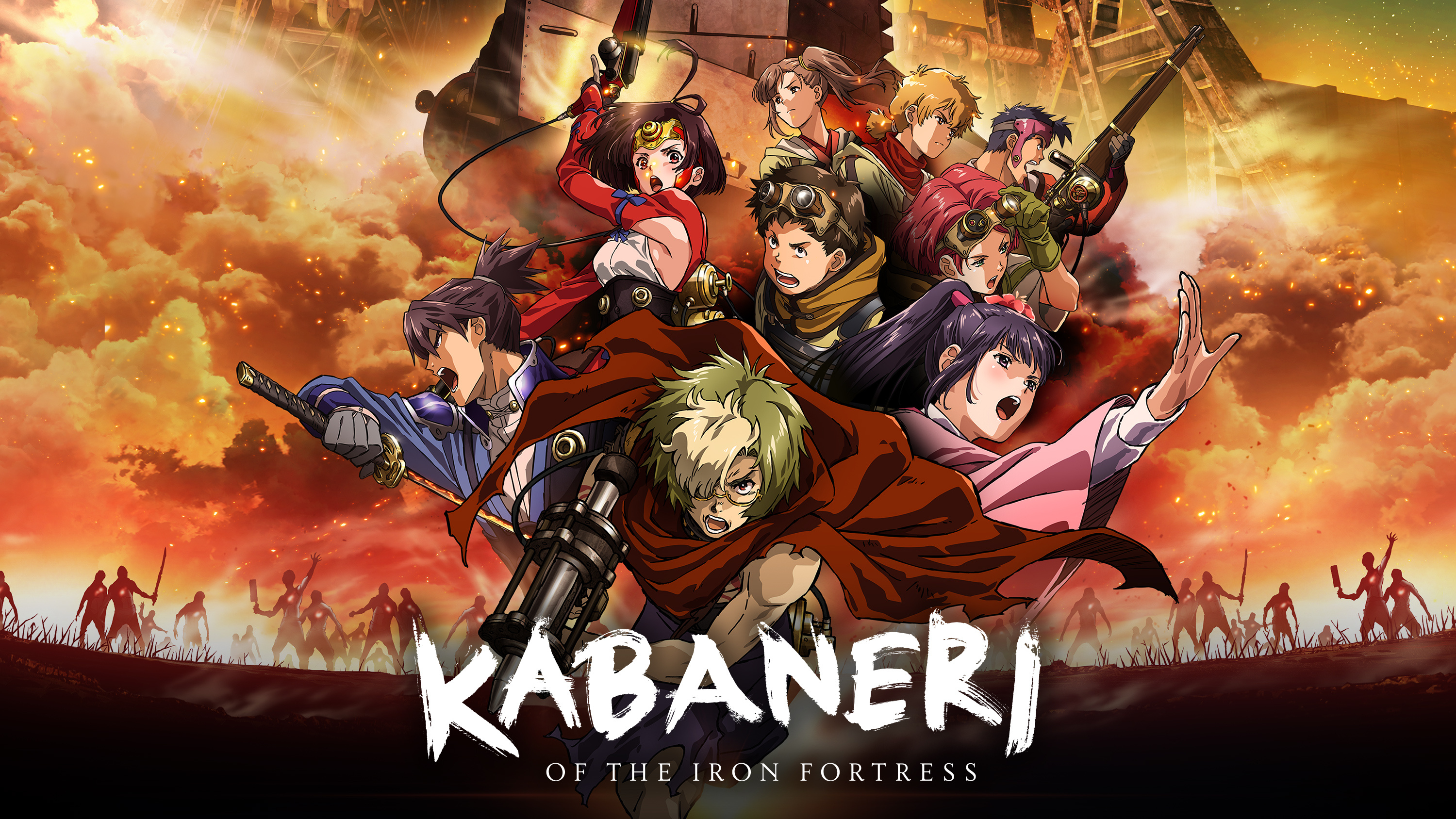
REVIEW: Kabaneri Of The Iron Fortress
TV Series And Films
December 13, 2023
post photo preview

Intro

And now for something entirely different: an Anime Review! For long-time followers of my content, you’ll understand what I mean when I say this is a special segment of The Critic Corner! Since I expect mostly people not familiar with my page to be reading this, I’ll spare you a lengthy introduction and simply qualify myself by mentioning I was a film and TV blogger in my earlier years.

I am still but not so much in the written form.

Now, I am no stranger to Anime. I love the medium and often preach American programing can learn a lot from the art form. Well, except for the negative traits of Anime that is. That’s a can of worms I don’t want to open on this article. That said, as a business owner/operator, author, content creator, husband and father, my time is very limited. As such, I am very selective with which films and television series I make time for. I’m a sucker for the zombie genre so I had to give Kabaneri Of The Iron Fortress a chance.

So, without further ado, let’s talk about humans versus zombies!

Preface

Much has been said about Kabaneri Of The Iron Fortress as the series frequently tops the Anime lists of Attack On Titan clones. I mean, one look at the premise and you’ll believe it was trying to ride the coattails of Attack On Titan. (See Plot) It doesn’t help with the optics with the show debuting in between Attack On Titan seasons 1 and 2. It also happens to be made by WIT Studios, the same one that produced Attack On Titan Seasons 1-3. There are also similar voice actors in the lineup. Oh, and Hiroyuki Sawano composed the music for both franchises in similar, bombastic fashion. To top it all off, both shows share the same director: Tetsuro Araki. So yeah, you can’t blame blogs and Anime news sites for labeling Kabaneri Of The Iron Fortress an Attack On Titan clone.
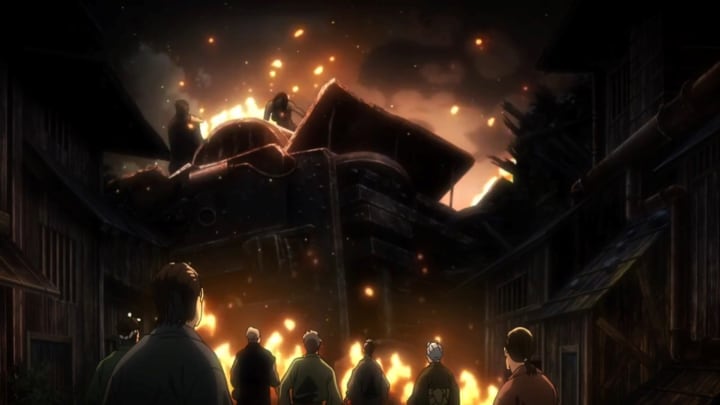
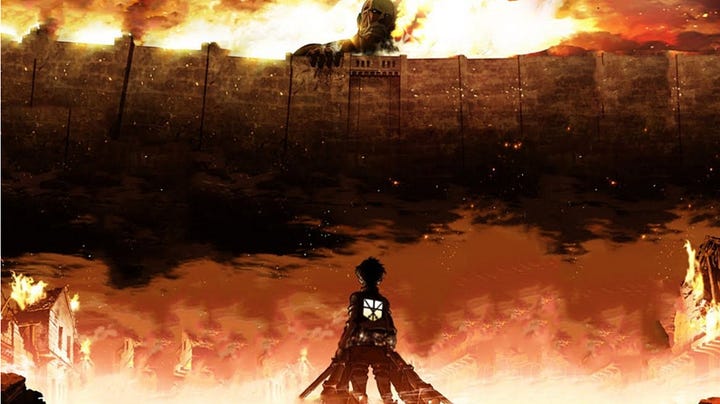
As someone that came across this series recently by accident via Instagram’s algorithm, I decided to take a chance at it especially since it was just a single season and end-capped by a follow-up movie. At first, I cringed at some seemingly Attack On Titan moments, but then the show started taking shape as it built its own world. At the conclusion of my viewing, this steampunk series had me wishing for more!

Most articles and reviews of Kabaneri Of The Iron Fortress are years old and read like carbon copies of one another. I will be reviewing this series on it’s merits alone. Anime aficionados will no doubt argue this from 17 different ways. This review is my contribution to those takes. Hopefully, this provides some nuance and perspective years removed from it’s initial 2016 release.

This is a spoiler-free review. That is, spoiler-free until the section explicitly titled SPOILER SECTION. So, until then, I’ll be extremely vague on details.

I close out this article with my recommendation on how to view the series to get the most out of the limited source material. It will be labeled if you wish to skip the spoiler segment.

Now, let’s get to talking about the series that can best be described as Mad Max meets Snowpiercer. With zombies.

Plot

Humanity is confined to living behind walled fortresses from flesh-eating monsters called Kabane, aka undead corpses. Unlike traditional walkers like The Walking Dead, these zombies are fast like the ones from 28 Days Later fortified with a metallic-like cage around their hearts making them harder to kill. The walled cities are all for naught as the kabane do break through. Shocker. It’s such a common occurrence, it’s a wonder why more cities aren’t overrun.
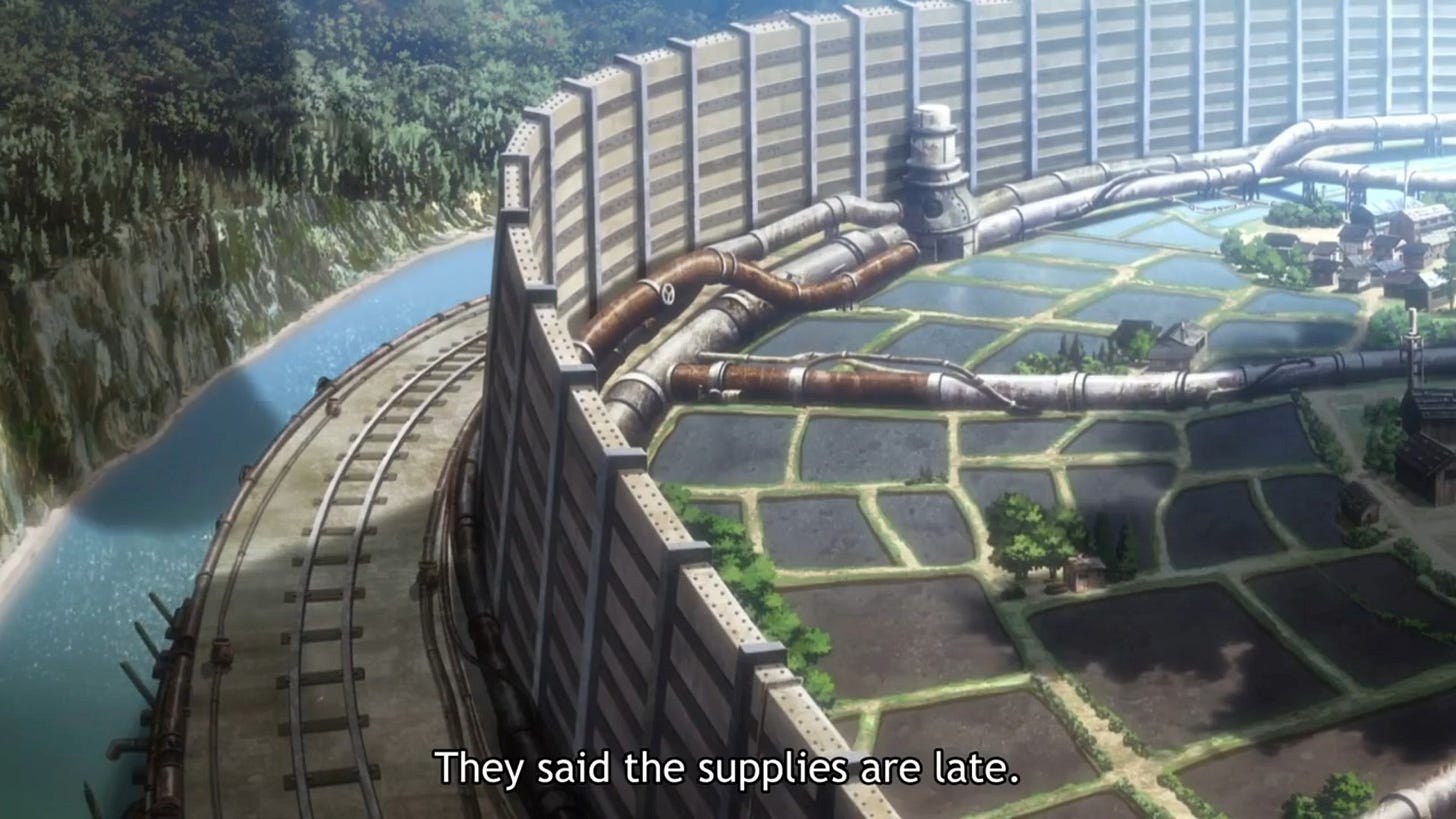
 

At any rate, survivors travel aboard iron-clad steam engines. These heavy fortresses on rails are built to mow through kabane and sustain heavy damage while being repairable along transit.

Early on we are introduced to our two main protagonists. Ikoma, the brash, bold, impatient steam worker determined to kill all the kabane. Mumei, a girl who is more than she appears to be. As per anime tropes, there’s a whole cast of characters I won’t take the time to list out as they are more one-note characters with limited screen time.

Our heroes are forced to flee the city after the wall is destroyed and the kabane rampage through eating and killing everything within reach. Our protagonists set off to one of the most advanced and protected cities in the land where the uncle of the surviving Yomagawa Clan lives. Along the way, they must barter supplies, make repairs, and carefully traverse dangerous, kabane-controlled territory.

Review

Here are my spoiler-free takes on the series starting off with the pros. The show itself is quite entertaining. Visually, it’s stunning. The action choreography is excellent. The world building and details are natural. The soundtrack is epic. I didn’t notice anything distracting about the CGI.

The plot’s pacing is kind of everywhere though. There are slow moments that are then ratcheted up to 11 with blaring music to tell you it’s go-time! There are some really stupid character decisions that are seemingly present only to setup the next action piece. Then again, this is a zombie horror series. A common horror trope is stupid character decisions, so I’ll be forgiving of this.

There are frustrating moments such as the obligatory prejudice against our protagonists when some of their mysterious abilities are discovered. While one of the characters is trusting of the protagonist, the fact that she’s a weak leader drags the plot. This leads to some redundant storytelling and those aforementioned stupid character decisions. And there are character jumps to conclusions that are so quick, blink and you’ll miss them.

Other than that, an industrial era Japan overrun by zombies is an interesting one to explore. The world the showrunners crafted is cruel and unforgiving but never hopeless. The structures and railway system are believable. The kabane themselves are terrifying killing anything that moves at random. The action is intense, bloody good fun never crossing into gratuitous overkill. Warning, this series does earn it’s mature rating.

I’ll expand on some of these points in the spoiler section.

So, if you find yourself watching the show and coming away wondering why such a good show didn’t get a second season, it’s probably because you were not influenced by the biased, negative reviews that greeted it at launch.

And because you probably saw the film versions of these instead of the show.

Which brings me to…

Review of Recap Films 1 & 2

Fans of the genre are aware of the common practice to produce film cuts of anime that serve as summaries or recaps of the series seasons. Well, that’s not entirely the case with the Kabaneri Of The Iron Fortress films Part 1: The Gathering Light & Part 2: Burning Life. The best way I can describe them are as The Director’s Cut of the show putting the spotlight more on Ikoma and Mumei.
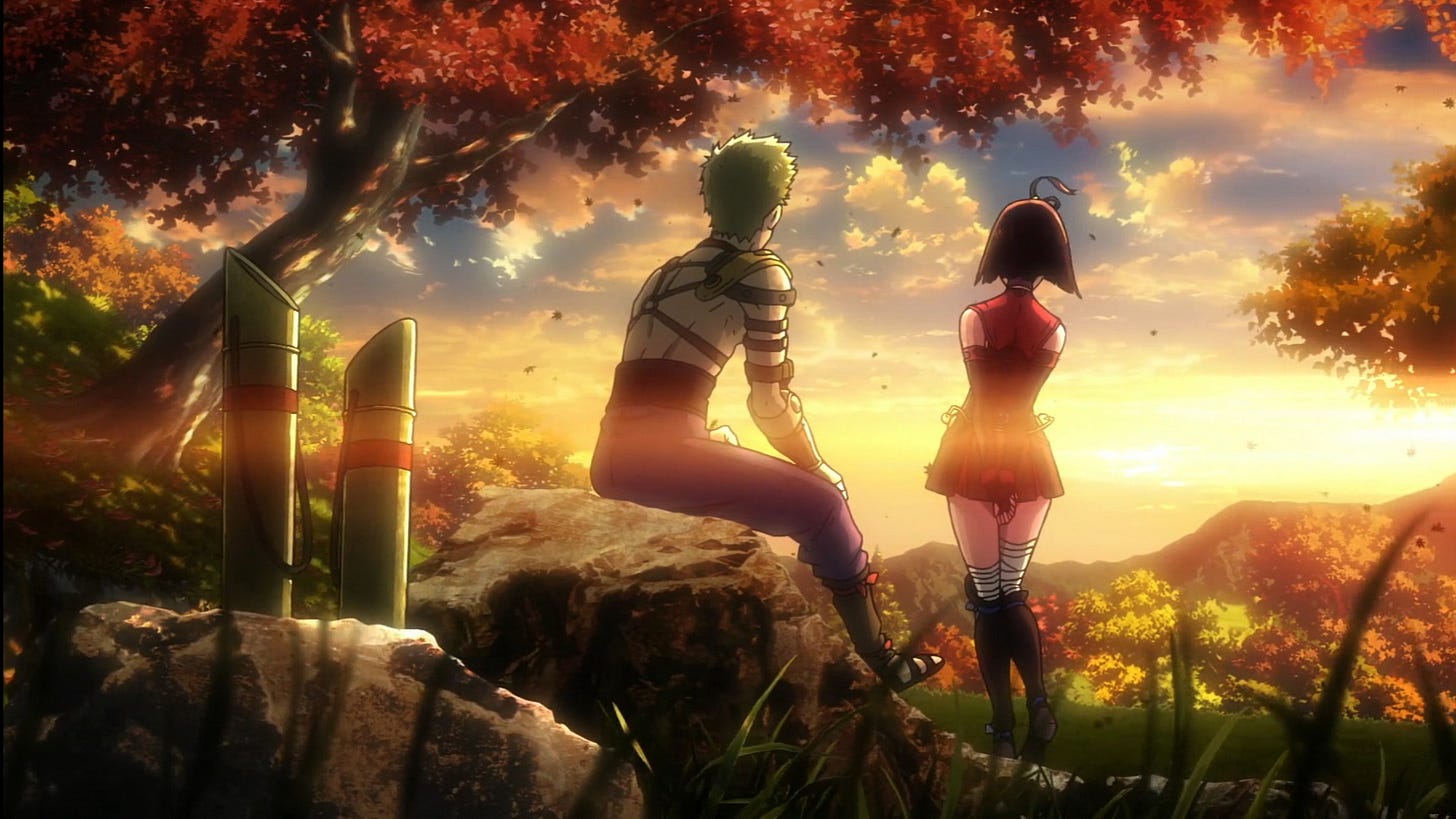
 

There are several plot threads, redundant character interactions, and filler scenes left out to tighten the story and pacing. There’s new footage added serving as prologue and epilogue that address some of the plot holes and character motivations that were either lacking or unclear in the series. So the complaints I have about the television series are not present in the films. Well, maybe except that the prologue to the first film is a bit of a spoiler for Mumei’s original introduction…

We don’t get much of any character development for the rest of the cast. No doubt the writers could have fleshed out the characters some more in a future season it never got. Which brings us to the next best thing: the sequel film The Battle Of Unato.
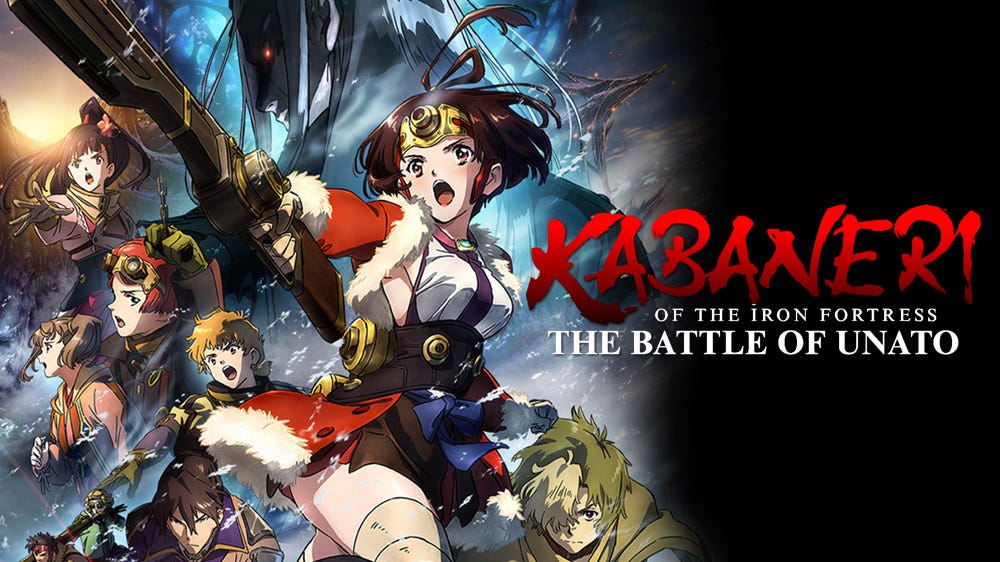
 

Review of The Battle Of Unato

This direct sequel picks up 6 months after the events of the series, wastes no time throwing us into the middle of the action, and sets up the namesake long battle to take back a mountain fortress overrun by kabane. Like the show it follows, the animation, the soundtrack, visuals and action scenes are all on point.

And like the show, there’s little to no development of the cast of characters including the new characters we’re apparently supposed to remember later.

Just like in the series, the new characters have trust issues with our protagonists which sets up redundant plot points. At least these aren’t dragged out like in the show. I mean, the film’s run time is just over an hour so there wasn’t much time to dwell on it.

And while I enjoyed the film, it was a wasted opportunity to explore the world of the show. The plot could also have been spent wrapping up a storyline from the series: finding a cure. More on this on the spoiler section.

The plot point introduced in the prologues and epilogues from the recap films Gathering Light and Burning Life, is concluded in The Battle of Unato. So, no character depth for the rest of the cast, but a lot more screen time for Ikoma and Mumei.

While no new ground is explored in this film, for a truncated show, The Battle Of Unato is the best we can hope for. And it’s probably all we’re ever going to get.

SPOILERS! Be Ye Warned!

I have few main points of the overall series to spoil and criticize so let’s get to it!

1)    Vague Superpowers
Our two main protagonists Ikoma and Mumei are revealed to be “kabaneri,” the show’s namesake. It’s to mean that they are a human/super zombie (or kabane) hybrid. So, like Blade, they have all the strengths of a kabane and none of their weaknesses – except the need to consume blood to quell their hunger. That sounds more vampire than zombie, honestly. How Ikoma and Mumei came to obtain the powers are different. Ikoma was bit by a kabane. Mumei was made one through a procedure infecting her with the virus. Ikoma can sustain heavy damage from kabane and has great stamina. Mumei relies on her fighting ability, nimbleness, and super-human strength to battle. She can unlock her full powers but lacks Ikoma’s stamina making her effective for brief periods of time leaving her vulnerable in a prolonged battle. Both of them have the ability to recover from battle damage but not regenerate. At least that’s how it’s presented. We’re never truly given a clear explanation. Ikoma constantly sustains gory injuries but manages to recover and seemingly regenerate organs except when losing an appendage. The epilogue of Burning Life shows Ikoma wearing what seems to be a prosthetic arm.

2)    Repetitive Plot Points
The most annoyingly repeated story beat is the distrust of our protagonist. The cast of characters, including newer ones later, express the same prejudice constantly segregating or imprisoning Ikoma. It’s a tiresome trope even after Ikoma and Mumei save everyone over and over again. Ikoma literally spends what feels like 1/3rd of the series runtime imprisoned. The Battle Of Unato seriously imprisons Ikoma yet again! At no point does Ayame, leader of the Yomogawa Clan, vouch for Ikoma to the leaders of other clans/tribes/whatever. It’s always “we don’t want Ikoma to attack us from behind in battle” discussions. It’s exhausting. The film summaries cut a lot of this out easily making this less insufferable.

3)    Lack Of Character Development
This is the weakest part of the series. We don’t get the emotional connection to most of the characters. This is disappointing as a particular tragedy is meant to be an emotional one but fails to land. Character interactions tend to be overdramatized and shouted at one another as if that’s supposed to make us understand the motivation or importance of the topics. We do get glimpses of certain character arcs such as Ayame becoming the reluctant leader after losing her father, Kuruzu learning to trust Ikoma, and Ikoma’s motivation to finding a cure. That’s pretty much it though. Oh, and Mumei is, well, Mumei. She kicks butt and counts on Ikoma as her shield, but other than that, she’s just built to fight.
 

4)    Kabane Variants
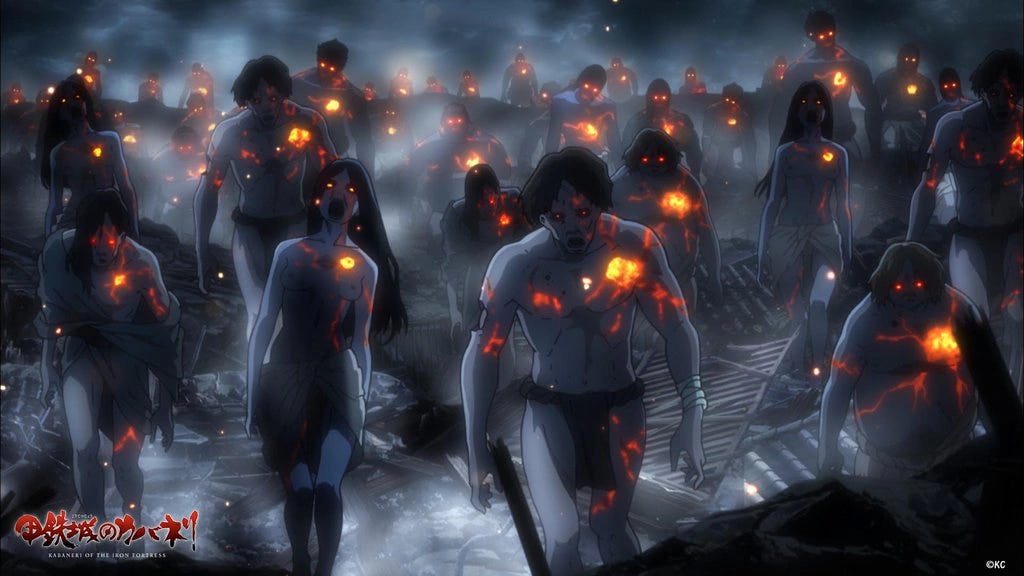
The series tried to setup that there are many different types of super zombies. 1) The typical, mindless, rabid horde. 2) The types showing some intelligence and weapons proficiency. 3) Battle-hardened kabane using other kabane as weapons and shields. 4) Finally, a hybrid colony made up of numerous kabane fused by a female kabane – something only female kabane are able to do, apparently. How any of this is possible isn’t explained. By the way, anyone else get Resident Evil vibes?

5)    Official Character Ages
Holy smokes! This is the biggest point of contention and a common issue with Anime in general. None of these ages match up with the character design and level of maturity. Here are the official character ages per this tumblr post citing Haruhiko Mikimoto’s Book of Paintings along with my proposed revised age list:

a.     Mumei 12 – WTH?! At least 14, but that doesn’t make it any better!

b.     Ikoma 17 – Probably but more likely 18. His immaturity keeps him out of the 20s.

c.     Kurusu 17 – Heck no! 21-23 for a young samurai this experienced!

d.     Ayame 17 – No. 19-20 is more believable.

e.     Takumi 17 – Likely 18 in keeping with Ikoma.

f.      Kajika 15 – Agreed.

g.     Yukina 16 – Maybe but 17 is more likely based on her maturity and experience.

h.     Sukari 15 – 16. Younger than Yukina but by months so he’s almost 17.

i.      Kibita 19 – Absolutely not! He’s at least 25. Mature. Oldest-looking of the main cast. An experienced warrior.

6)    Truncated Search For A Cure
With respects to The Battle of Unato, I wish the showrunners had used this opportunity on the plot to search for a cure. At the end of the series, there is a scientist from Biba’s group that carries a briefcase containing two vials: black blood and white blood. The black blood gives a kabaneri vague super saiyan powers while a female kabaneri also gains the ability to become a fused colony known as black smoke. The white blood is to undo the effects of the black blood before it takes hold of the mind. So, what happens if you give white blood to a kabaneri after they’ve been cleared from the black blood? Does it turn them back into human? These scientists have the ability to harness the kabane virus to make kabaneri but not undo it?

Those questions are not even remotely explored in The Battle of Unato. Worse yet, despite the fact that the survivors of Biba’s tribe joined the Kotetsujyo at the end of the series, those characters are left out of the film’s plot entirely. No mention of them being dropped off somewhere. Yet, Mumei still makes a passing reference to Biba.

In the end, we got just another excuse at showcasing humans fighting super zombies.

7)    The Crush
The Battle of Unato includes what some have called an out-character crush Mumei has on Ikoma. If you only watched the series and The Battle Of Unato, then yes, it’s seemingly out-of-character. If you watch the film cuts and The Battle Of Unato, you’ll see it was a direction the creators intended.

Towards the end of the series, we learn Mumei refuses to be seen as weak for fear of being cast out or left behind. Biba, her “older brother,” ingrained in her mind that if she is weak, she’s as good as dead. Ikoma tells Mumei its wrong to assume because one is weak that they won’t matter or can’t struggle to survive. Furthermore, Ikoma expresses to her that she doesn’t have to keep fighting to prove her worth, but Mumei doesn’t accept this because of Biba. The new footage in the film cuts of the series build upon Ikoma’s and Mumei’s relationship. Meanwhile, in The Battle of Unato, Mumei’s loneliness is triggered when she goes for the enemy alone – something she has done numerous times – except she counted on Ikoma to be with her but couldn’t.

“But Ikoma said Mumei reminds him of his sister!”
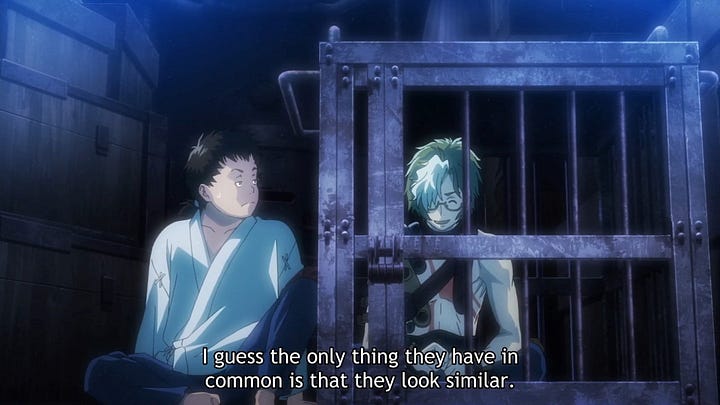
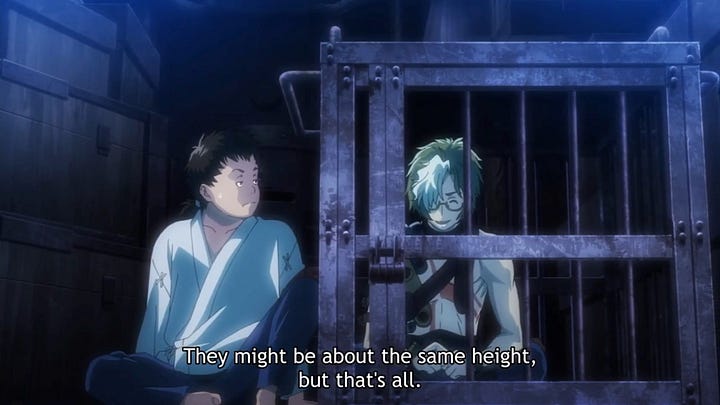
No, he didn’t. In a particular scene where Takumi asks Ikoma if Mumei reminds him of his sister Hatsumi, Ikoma brushes it off almost embarrassed of such a comparison. For some reason, Ikoma’s English subtitles quote him as saying they look alike, however, the Japanese dialogue is clearly talking about the girls’ heights.
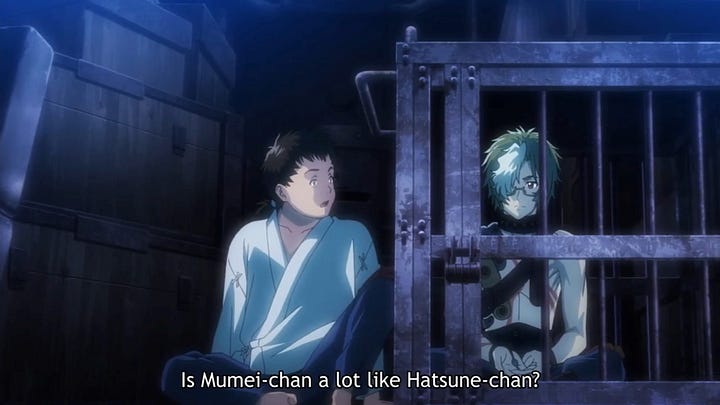
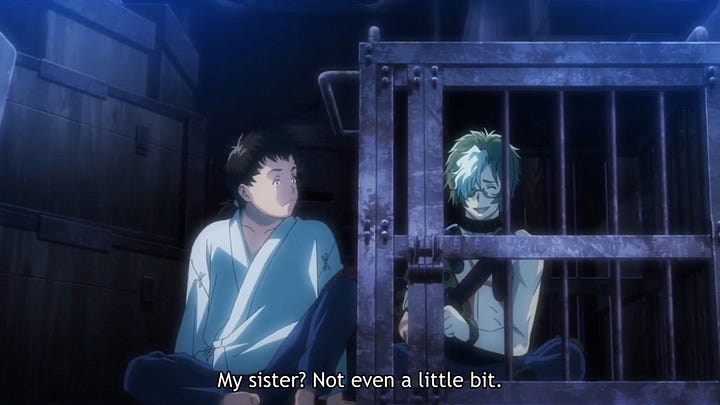
So, while there are flashes of Ikoma remembering his sister, he makes a point to Mumei that he’s lost the people that meant the most to him. Ikoma adds he does not want to lose Mumei to which she makes him promise her to never die.

How To Watch The Anime

I recommend watching the film summaries and then The Battle of Unato. All three films together tell a cohesive story with proper plot arcs for our main leads. After that, watch the series for more world building and filler material. Think of this like watching The Lord Of The Rings Trilogy theatrical version before checking out the extended versions. Oh, and remember to watch the end credit scenes for all three films!

The Manga

For the life of me, I cannot find the manga that published on the Comic Garden magazine weekly for a short period. Four volumes apparently do exist.

It was reported to be a sequel to the series, but from the looks of it, it’s more like the show in manga form. Still, I doubt a short run of chapters would add more to the story than the sequel film did.

Conclusion

People will always conjure up Attack On Titan comparisons because Anime, but a more fair assessment of Kabaneri Of The Iron Fortress is that it tried to capitalize on the zombie craze of the 2010s. We had everything from television shows like The Walking Dead, Game of Thrones, and the Korean epic series The Kingdom, to major motion pictures like Zombieland, Warm Bodies, and World War Z. That’s not mentioning all the other zombie-themed anime. In the midst of a saturated market, Kabaneri Of The Iron Fortress is a fresh spin on the worn-out zombie genre telling a compelling story fans like me wish could have been explored some more.

I highly recommend giving Kabaneri Of The Iron Fortress series and films a chance. It’s entertaining. And unlike the series its accused of cloning, this one has a happy ending.

By the way, if you can get your hands on the manga, awesome! Share below if you find it in English!


community logo
Join the The Andres Segovia Show Community
To read more articles like this, sign up and join my community today
0
What else you may like…
Videos
Podcasts
Posts
Articles
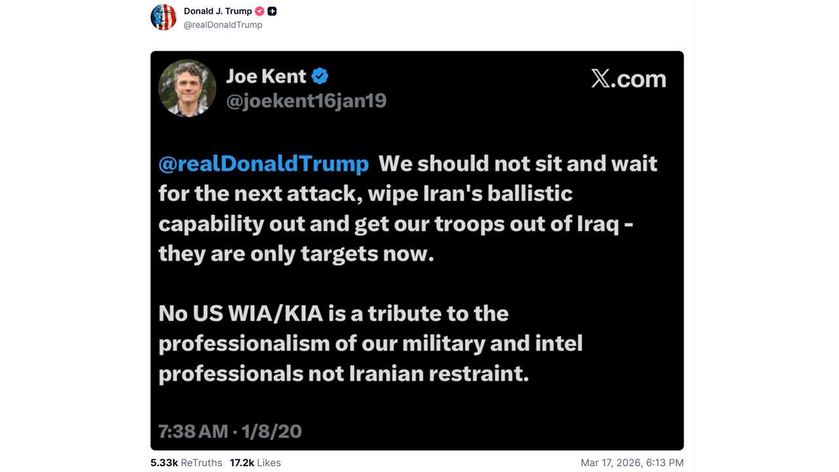
Moral Conviction or Grandstanding? My Take On The Joe Kent Resignation

On this special segment of Off The Record, I address the sudden and controversial resignation of Joe Kent as Director of the National Counterterrorism Center (NCTC). While the mainstream and dissident right focus on Kent's criticisms of Israel and the ensuing FBI investigation, I also dive deeper into the overlooked history of terror assessments and the critical role Kent played in identifying active threats to the American homeland.

This episode is meant to challenge the narrative from both sides, questioning whether Kent’s resignation was an act of moral conviction or a calculated move for "the court of public opinion." This episode also highlights the alarming rise in domestic terror threats and the "rogue" political actors who may be compromising national security.

00:34:53
Hit Singles And Overcoming Music Industry Hurdles | Guest: Singer Natasha Owens

Natasha Owens is a patriotic powerhouse who started the trend of conservative anthems topping the pop charts, and recently has responded to Bruce Springsteen's new protest song, which criticizes federal immigration enforcement actions in Minneapolis, with a song of her own. Natasha's new song, The Boss, was released on February 6th, and the new single immediately debuted to number one on the iTunes rock chart, knocking Springsteen to number two, and landed at number two in the iTunes all genres chart ahead of Springsteen, and new singles from Taylor Swift, Bad Bunny, T.I. and more. The new single is available on all platforms now.

Natasha Owens joins me again to talk about her recent singles and her the seventh studio album That's America which released on October 2025.

Full Interview:

00:01:12
The Marauder blade by DMO Knives!

Channeling my inner pirate with this awesome, limited edition The Marauder high carbon steel blade from @dmoknives !

Check out selections at dmoknives.com
See one you like, use code SEGOVIA at checkout!

#theandressegovia #dmoknives #pirate

00:00:29
Elijah Schaffer & Sarah Stock: Another Cautionary Tale

I was not as familiar with Sarah Stock as I was of Elijah Schaffer. I always had my misgivings with the latter while assuming the former was out for clout.

This downfall is of epic proportions and many of your favorite "influencers" will be called into question of what they knew, when they knew it, and why they did nothing about it.

Elijah Schaffer & Sarah Stock: Another Cautionary Tale
My Top TV Scores Of All Time: 7 Lonesome Dove

n this edition of The Soundtrack Corner I continue My Top Television Scores Series.

On this episode, I present selection's from the beautiful and unforgettable score to Lonesome Dove by the late, great Basil Poledouris!

My Top TV Scores Of All Time: #7 Lonesome Dove
My Top TV Scores Of All Time: 8 Band Of Brothers

In this edition of The Soundtrack Corner I continue My Top Television Scores Series.

On this episode, I present selection's from Michael Kamen's moving score to HBO's Band Of Brothers.

My Top TV Scores Of All Time: #8 Band Of Brothers

I'm completely fed up with Right Vs Dissident Right slop that clogs up my feeds across all platforms. It helped me to disconnect from all the noise the last few days to focus on things that actually matter.

As my show returns to live this week, I will be offering something different than just Tech talk and reviews. As a licensed Realtor estate broker and property manager, I will conduct Real Estate 101 courses and offer advise to property owners looking for management solutions. There will be content for Tenants too.

As for politics, my focus is Los Angeles, Orange, Riverside, San Diego counties. Of course I will keep you up to date with what I can regarding Sacramento and the governors race.

Stay tuned. Until then, here is some financial insight:

How Faith and Resilience Rebuilt a Legendary Career | Guest: Award-Winning Artist Steph Carse

post photo preview
post photo preview
Moral Conviction Or Grandstanding? My Take On Joe Kent's Resignation

I want to be clear from on the onset that I was livid at the news - and that was before I read Joe Kent's resignation letter. Though to me his resignation is nothing more than political grandstanding, that is not the purpose of this article. My intention is to provide nuance to the issue at large. Not contribute to the mudslinging between the Dissident Right and MAGA types. 

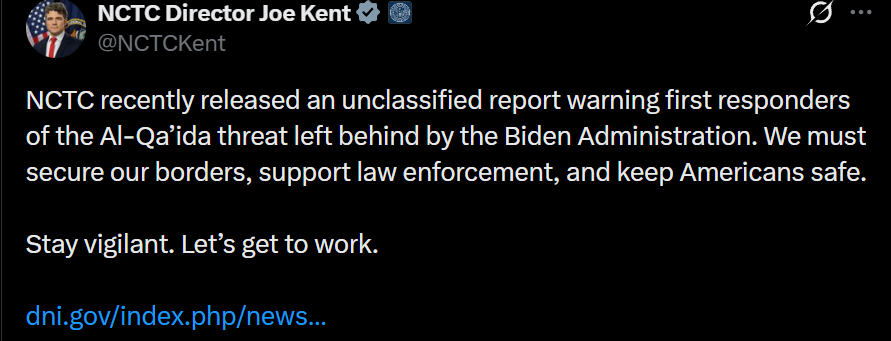
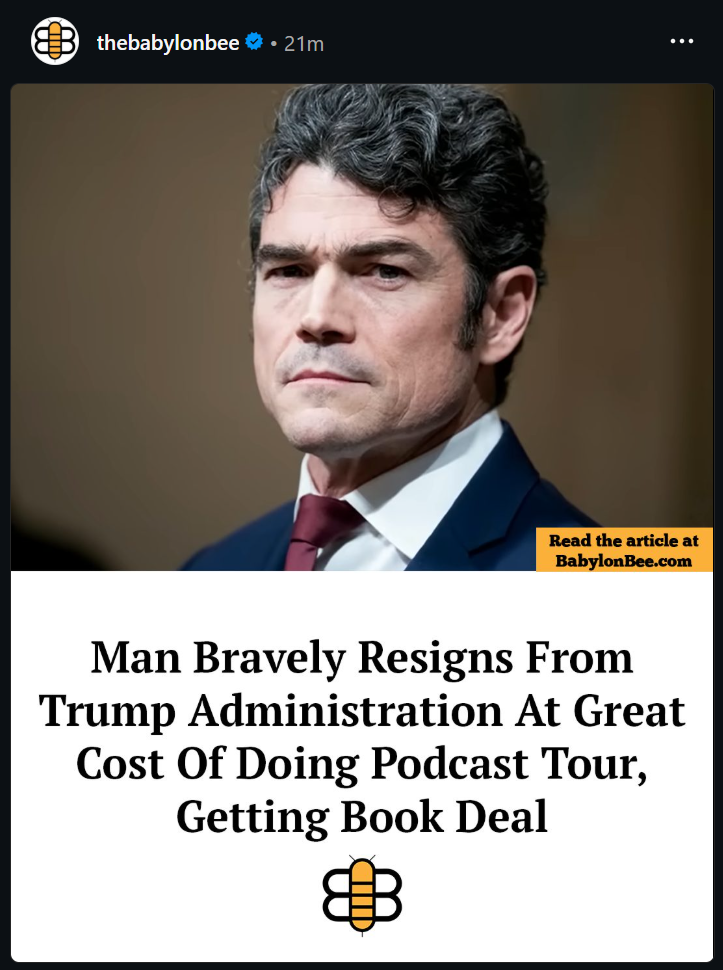
The latest episode of Right Wing infighting drama involves the sudden resignation of Joe Kent as Director of the National Counterterrorism Center (NCTC).

As of this writing, Joe is scheduled to appear on the Tucker Carlson and Candace Owens podcasts. These shows that have become openly critical of the Trump Administration.

His resignation letter, his confirmed appearances on [controversial] podcasts, and the speculation of a book deal only give Joe's critics the firepower they need to discard him as another raging, anti-Israel actor.

Be that as it may, when emotions are high, as they usually are when dealing with anything online nowadays, reason and rationality go out the window.

To understand why Joe Kent’s appointment to the position of NCTC Director was celebrated by those in the intel and GWOT community, I have to explain the terror assessments that have largely gone unnoticed by both the Biden and current Trump Administrations.

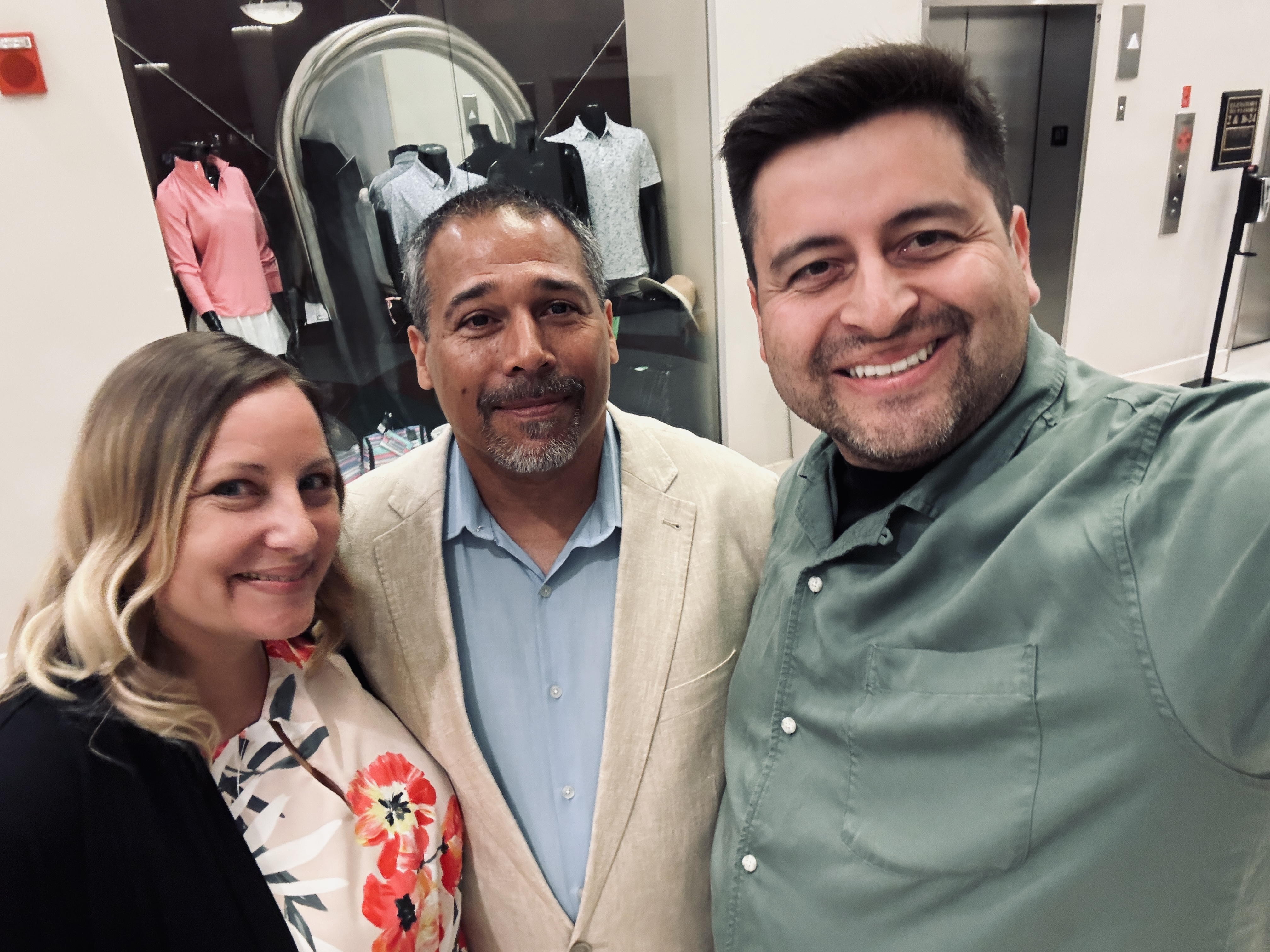
This is Sarah Adams and Dave “Boon” Benton. Some of you might recognize Sarah from her appearances on The Shawn Ryan Show. (Shawn’s company has since platformed her own show The Watch Floor which I highly recommend you follow on Rumble and YouTube.) She was a CIA Targeter best known for tracking down terrorists while stationed in Benghazi, Libya.

Boon is best known for his heroics as one of the six GRS operators that defended the CIA Annex in Benghazi, Libya during the September 11-12, 2012, terror attacks.


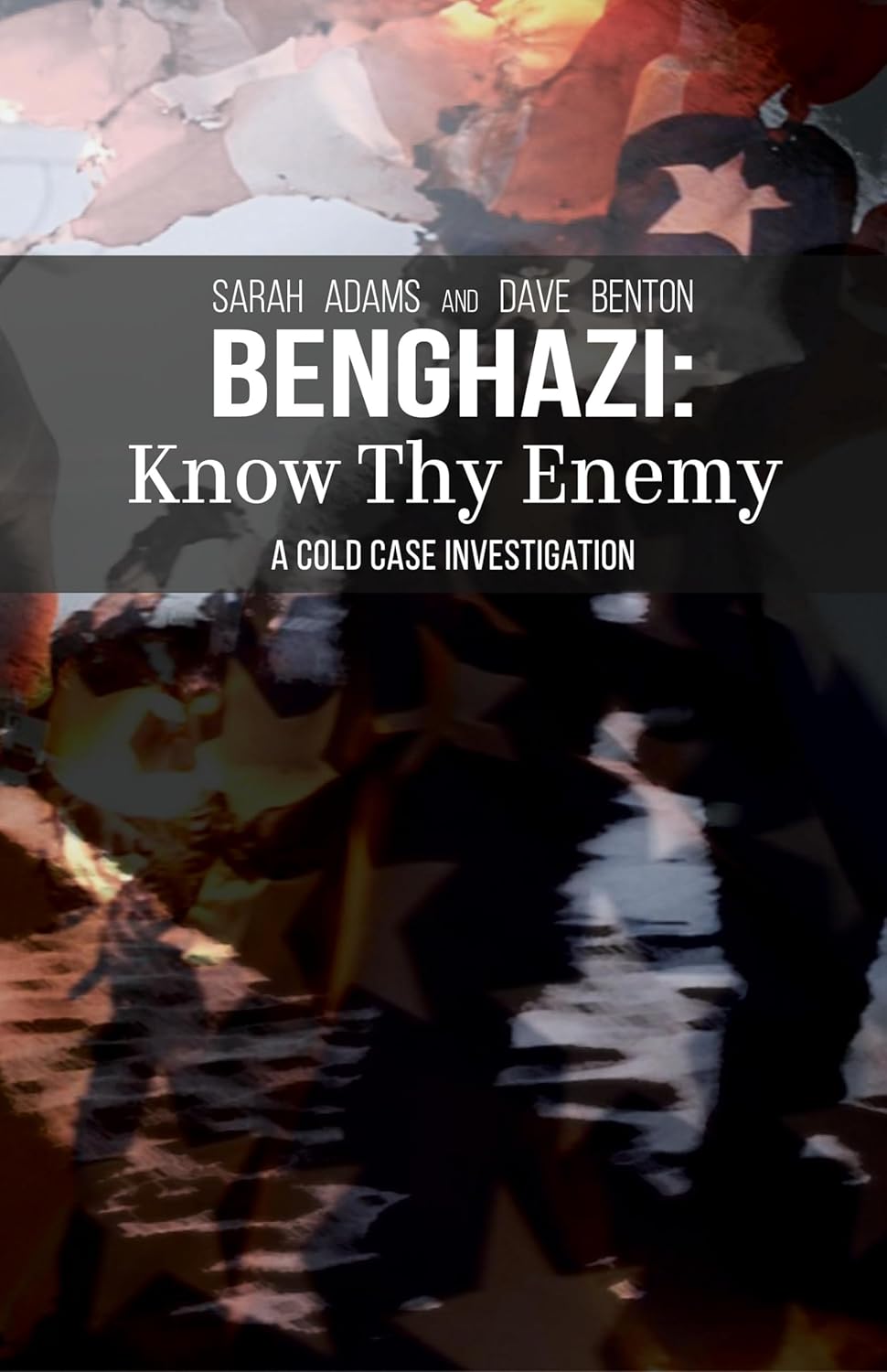
Boon and Sarah and I got acquainted in 2022 when they prepared to release their book Benghazi: Know Thy Enemy: A Cold Case Investigation. This was not another “Benghazi” book. It was a detailed case file on numerous attackers responsible for the deaths of four Americans at both the U.S. Special Missions Compound and the CIA Annex Station. The book contained the last known whereabouts of the attackers and known aliases. The hope was for responsible members in the intelligence community to not only be on the lookout for these terror suspects but also working with our allies in the region to bring them to justice.

The Biden Administration largely ignored imminent threat assessments Boon and Sarah were able to uncover. During one occasion when Sarah did not use the proper channels to pass on timely intel to targeted installations, the Pentagon reprimanded her for doing so instead of taking her intel seriously enough to look into.

As a Trump supporter, I had hopes that things would be different under new management.

Things did change but for the worse.

Sebastian Gorka briefly served as Deputy Assistant to the President and a strategist on national security and foreign policy during Trump’s first term in 2017. He was appointed to the role again in the new Administration and Senior Director for Counterterrorism on the White House National Security Council (NSC). Gorka has been accused of largely downplaying certain terror threats.

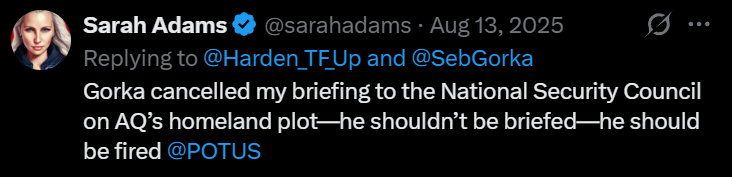
In Spring 2025, Sarah Adams had been given an appointment to brief members of the NSC on the terrorist plots against the Homeland. That briefing was canceled by Sebastian Gorka who went on to slander her character to people within the White House.

Well, the FBI deals with counterterrorism so there was some hope for a serious change when Kash Patel become director along with the new Deputy Director Dan Bongino. Nope. Instead, Patel's FBI opened an investigation to determine how Boon was getting his intel – instead of analyzing and reviewing the intel!

Is The New FBI The Same As The Old? - Watch On Locals.com

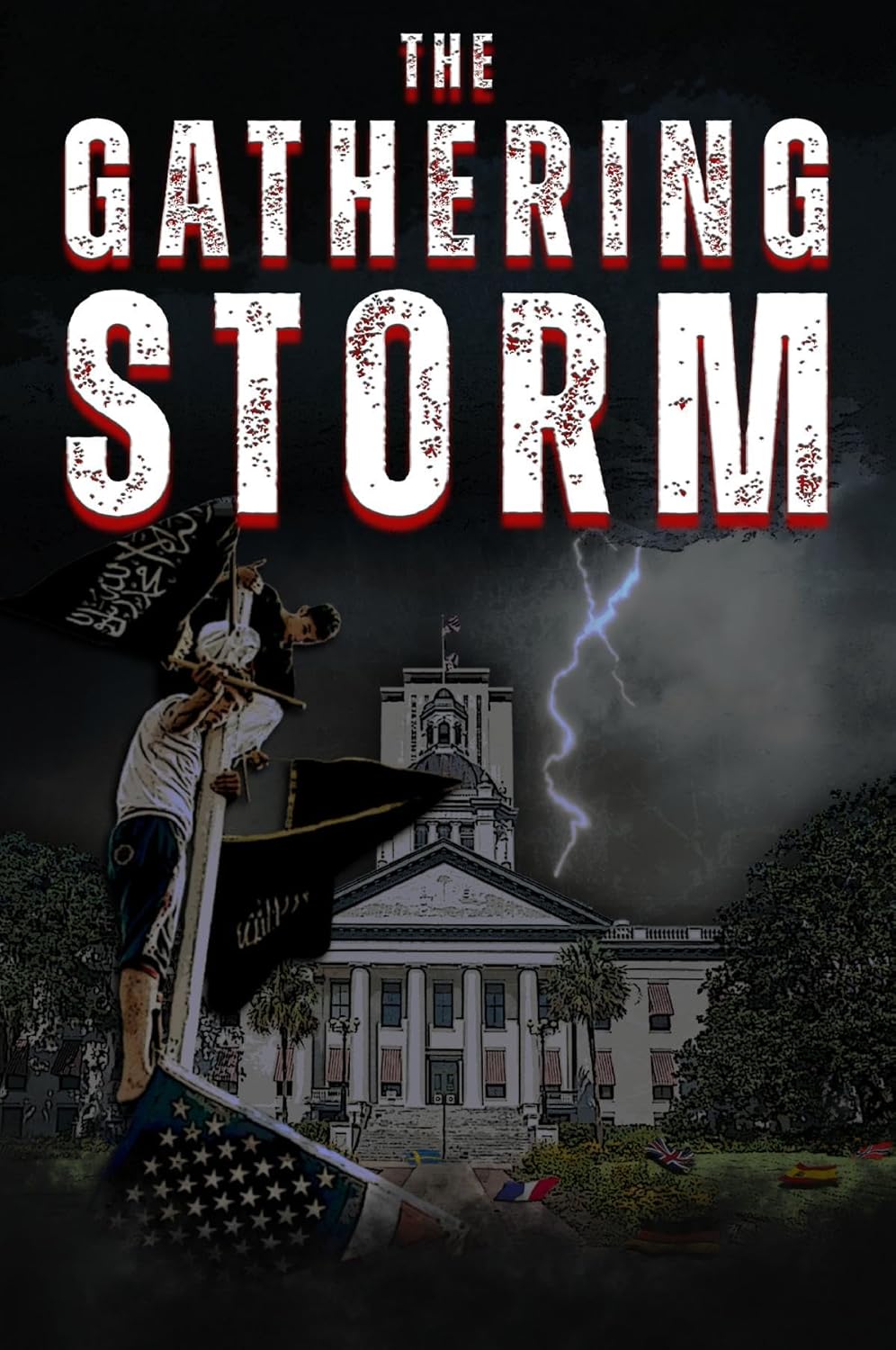
That same year, Sarah, along with a group of operators and investigators including Scott Mann published a book called The Gathering Storm. In it they address the critical gaps in our nation’s preparedness for emerging terror threats following the botched Afghanistan withdrawal. This includes awareness of Al-Qaeda’s plot against the Homeland.

Next to no one in positions of power and influence were aware of these reports or were writing them off as fearmongering alarmism.

Politically speaking, the Biden Administration, which was an extension of the Obama Administration, did not like any reports indicating Al-Qaeda was still around and growing in strength. Obama himself declared that Al-Qaeda was destroyed in 2012.

In similar fashion, the Trump Administration does not like reports indicating that ISIS is still around and also growing in strength though no where near as large as Al-Qaeda. If you’ll recall, Trump declared that ISIS was destroyed in 2018.

So what hope was there to help inform first responders and the public of awareness and preparedness to terror threats if both the Obama/Biden and Trump Administrations where not taking it seriously?

Enter Joe Kent, retired Green Beret combat veteran and Gold Star husband.

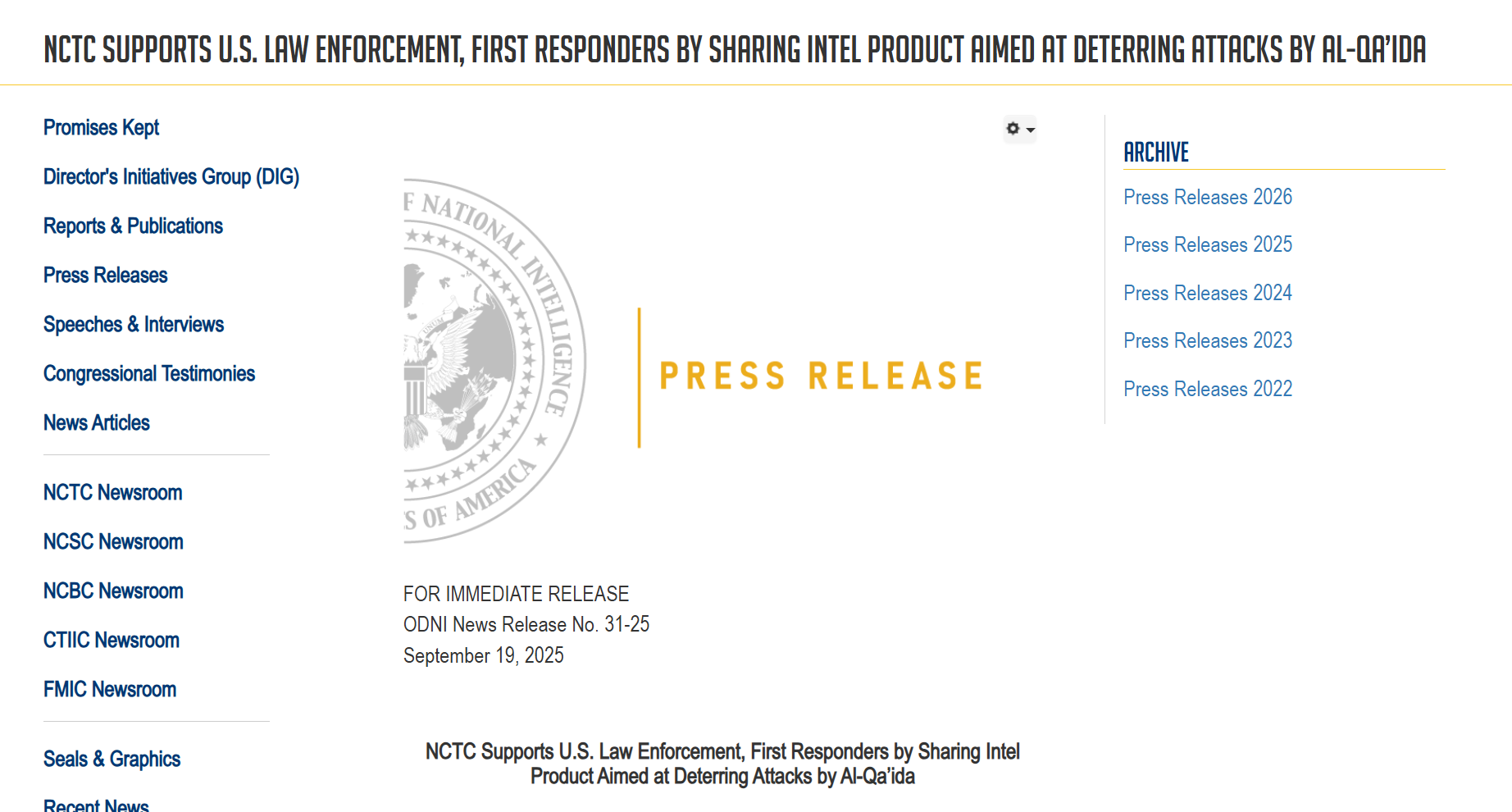
His confirmation as Director of the National Counterterrorism Center was celebrated by those in the intel space both active and retired. Joe Kent immediately took note of threat assessments Sarah Adams and Scott Mann detailed in The Gathering Storm. He made them actionable.

Joe Kent even testified before Congress about the 18,000 known Islamic Terrorists in our borders. All this while FBI Director Kash Patel and Director of Counterterrorism Sebastian Gorka either downplayed it or dismissed outright.

The role of Director of the National Counterterrorism Center is to integrate, analyze, and share terrorism-related intelligence; maintain the authoritative database of known and suspected terrorists; provide terrorism analysis; and drive whole-of-government action to counter terrorist threats against the United States. Joe Kent served as principal adviser to Director of National Intelligence (DNI) Tulsi Gabbard. (It is worth noting that Tulsi is not supportive of the current operation against Iran.)

Joe Kent’s resignation comes at the worst time.

Since March 1st, there have been four confirmed terror or attempted terror attacks on US soil:

  • March 1 – Austin, Texas bar shooting
  • March 7 – New York City attempted bombing
  • March 12 – Old Dominion University shooting, Norfolk, Virginia
  • March 12 – Temple Israel synagogue attack, West Bloomfield Township, Michigan

Sebestian Gorka serves as a principal advisor to the President and NSC leadership on counterterrorism matters, including threats, policy options, and response strategies. He's to coordinate interagency efforts across with the Department of Defense, State Department, DHS, FBI, CIA, ODNI/NCTC, and others to develop and implement counterterrorism policies. He’s someone that has proven untrustworthy and no one is really talking about that.

It is to that point why I am upset at Joe Kent's resignation. He was in position of influence and effectuating change. What good will he do now having resigned and relegated himself to cannon fodder for political pundits and critics? 

Will Joe have a moral conflict when, God forbid, more Americans are harmed in the Homeland because the other principal advisors did not take threat assessments serious?

We need people with the courage to dissent while in the fight, to be the change they want to see.

ADDITIONAL READING

Sarah Adams posted her frustration and counter points to Joe's resignation letter claims on this X.com Post.

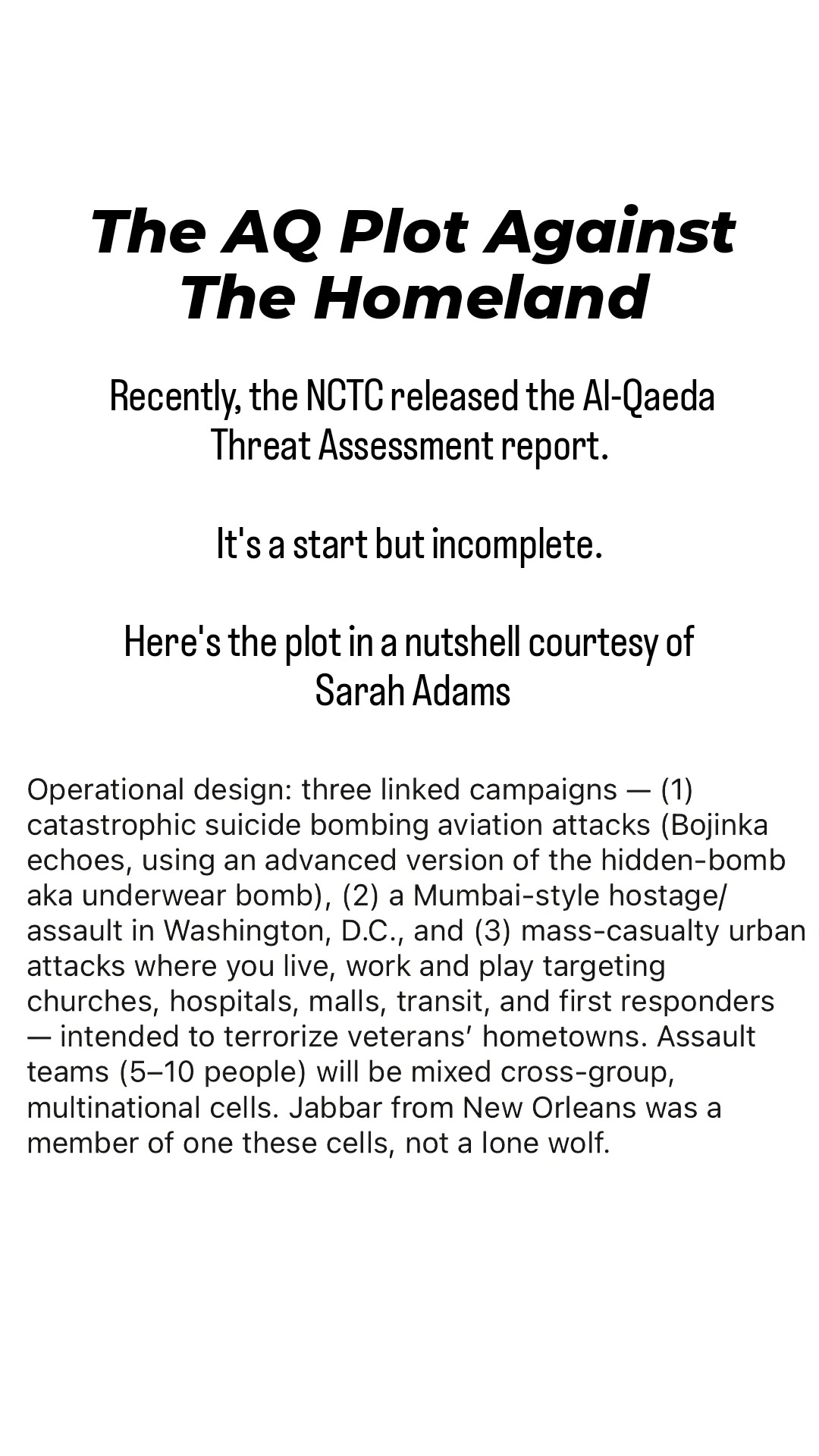
Instagram users can find my summary of the AQ Homeland Plot 2.0 on my pinned Instagram Highlights.


Read full Article
post photo preview
Watchmen: The Book vs Film

We are all introduced to comics at some point in our lives.  (Who hasn’t read a Peanuts comic strip?)  Sadly, the comic book, or graphic novel (collection of comic books), is looked down as a children’s pastime or ruled out as non-compelling literature altogether.  On March 6, 2009, the highly anticipated film adaptation of the first graphic novel to be praised as a master work of literature made its big screen debut. 

There is no immediate consensus on public reaction to the film.  Depending on which group you fall under, you would either love it for its originality, or hate it for changing pivotal scenes from the source material after constant promises to stick as true to the book as possible.

This article appeals to both the educated and uneducated persons in the world of the WATCHMEN!

THE NOVEL

Before I can begin, you need to know the story of the Watchmen (assuming you haven’t seen the movie by this article date).

This synopsis from the publisher DC Comics:

“It all begins with the paranoid delusions of a half-insane hero called Rorschach.  But is Rorschach really insane or has he in fact uncovered a plot to murder superheroes and, even worse, millions of innocent civilians?  On the run from the law, Rorschach reunites with his former teammates in a desperate attempt to save the world and their lives, but what they uncover will shock them to their very core and change the face of the planet!  Following two generations of masked superheroes from the close of World War II to the icy shadow of the Cold War comes this groundbreaking comic story — the story of The Watchmen.”

Rorschach

None of the heroes from the novel are recognized instantly in our culture.  None of the heroes ever got spinoff comics after the critical acclaim of the short series.   Watchmen is a murder mystery developed with the same hard work and care that goes into making a fiction novel.  Both author Alan Moore – famous for this and other works of fiction such as From Hell and V for Vendetta – and illustrator Dave Gibbons have painfully crafted a complex, multilayered, psychological anti-hero adventure that spanned a year in telling (1986-87).  The end result is the perennial and most influential “graphic novel” ever accomplished.  The humanity exuded by each character is strikingly real and relatable.  It is this main element along with the real-world scenario that inspired realistic retellings of future popular comic book superheroes. 

Author Alan Moore
Author Alan Moore

The story takes place in an alternate United States in 1985.  The world is in the middle of a Cold War, particularly between the two nuclear superpowers: the USA and the Soviet Union.  The setting nearly parallels our world except that masked vigilantes are part of the culture, the USA wins the Vietnam War, Richard Nixon is still President in 1985 and the “Superman does exist, and he is American.” 

The attention to detail in terms of the character development, political climate, public sentiment towards masked heroes, and government employment of heroes is all very real, very relatable, very, um, heartfelt.  It’s the realism of the plot that turns the story from a mere fiction to a piece of American History. 

For those that haven’t noticed, up until the debut of Watchmen, the only heroes mingling with citizens of real-world cities belonged to Marvel Comics.  DC Comics superheroes live in alternate versions of American cities. (e.g. the equivalent of New York City and Chicago in the DC Universe are Metropolis and Gotham City.)  Along comes Watchmen and thrusts heroes not only into our cities but into our cultural history.  It is this connection to the real world, the very real interaction between masked heroes, the average citizen, federal government, etc. that sets Watchmen on a league of its own.  Many have tired duplicating it but have never matched its complexity and success.

It is safe to say that the medium of comic books has never been the same since.  And with many popular comic books getting motion picture adaptations, the movie treatment for Watchmen was unavoidable.  It was just a matter of when a good script, the director with the right approach and visual style to bring the story to life would come along.  Twenty-three years later and after a surge of an ever-increasing number of comic books-turned-films hitting multiplexes, Watchmen finally made it to the big leagues with a nearly 3-hour epic theatrical release.

THE FILM

The Watchmen movie version moved around different studios with scripts written then rewritten over and over again without any true convincing concept to bring to the big screen.  Director Terry Gilliam used to be tied to directing the big screen adaptation in the late 90s.  He stated best the complications of making a 2 ½ hour version of the novel:

“Reducing [the novel] to a two or two-and-a-half-hour film … seemed to me to take away the essence of what Watchmen is about.” 

I, like Terry, agree that a miniseries would’ve been the best avenue with which to approach the story.  Though it felt like an eternity, it was inevitable that the graphic novel would get its major motion picture treatment.  Now is a good-a-time as any to do so since movies containing dark, mature subject matter are drawing more audiences to the theatres (e.g. The Dark Knight).

The difficulty in bringing about this book-to-screen adaptation is in how to keep the essence of the book intact while making the film a fascinating viewing experience.  Compromises had to be made, of course.  Whenever anyone is tackling the adaptation of a popular work, groups of purists, fans, and dissenters will always be nearby ready to level any criticism in attempts to impact the filmmaking process.

The great risk of Watchmen is that it is not really adaptable without first tossing out important elements of the book that make the story “the story,” and still keep it short enough to screen at a theatre near you.  Warner Bros realized this issue which is why they hired Director Zack Snyder to take the helm for the project.  They needed to stay as true to the source material as possible.  Zack Snyder promised to deliver the goods as he did with Frank Miller’s 300.

Director Zack Snyder

Ultimately, an all-important comic-within-the-comic – Tales of the Black Freighter – didn’t make the final cut, but it is getting its own film treatment as a direct-to-video.  However, the comic tale is such an integral part of the major story that Warner Bros is producing a special DVD release that will include deleted scenes and the Tales of the Black Freighter edited into the main film.

This is evidence that the filmmakers knew the importance of keeping integral parts of the novel in place and did their best to execute the film appropriately.  Comic book illustrator Dave Gibbons was brought on early on to supervise the filmmaking process to make sure they stayed true to the source.  

THE CONTROVERSIAL ENDING

A fan could sleep soundly knowing that such a talented team dedicated to preserving the essence of the novel is developing the movie, right?  Well, months before the initial release date, speculation about a major revamp to the climax grew amid attempts to keep it hush-hush.  After constant pressure from the press and fans director Zack Snyder dropped the bombshell confirmation that the most major element and integral part of the script was altered to suit a more general audience.

The squid in the novel is a byproduct of artistic design and genetic engineering developed under the guise of a movie special effect.  The actual purpose of the disgusting, giant squid was to fool the world into thinking it’s an alien from another dimension hell-bent on destroying all humanity.

The movie version of “the squid" is re-imagined as a supposed new energy research project intended to provide cleaner, more efficient means of energy to an ever-growing human population.  

The actual purpose is for the villain to reengineer these large mechanical devices, use them as psychic energy explosives each with the destructive power of an A-bomb, and frame one of the Watchmen for the attack.

The villain’s end game in both mediums is the same: unite the world by scaring them into believing they must ward off a common enemy.  In both cases he succeeds

The Original Ending

When Rorschach investigates the murder of Edward Blake – alias The Comedian – he believes there is a plot to kill off costumed heroes.  He sets off to warn other retired heroes of his findings.  While Rorschach is investigating the murder there is an entire other mystery being covered by the Press: the mysterious disappearance of yet another famous creative artist.  The artist is among a group of his peers that “vanishes” without a trace. He is working with scientists, engineers, and others on a secret project for an unknown “filmmaker” all along.   Rorschach’s wild theory about a mask killer is taken more seriously when another hero – Adrian Veidt – is gunned for, Dr. Manhattan flees the earth for Mars, and Rorschach is framed and imprisoned.  All this is occurring during a time of political tension between the two superpowers threatening to go to nuclear war and lay waste to the earth.

Illustrator Dave Gibbons

Illustrator Dave Gibbons was asked about the cutting of the squid during a Q&A session at the 4th Annual New York Comic Convention back in February.  His initial response was:

“The outcome is exactly the same as the graphic novel, but the MacGuffin, the gimmick, is a little different.  I think you know what I mean; there's no squid.  I'd rather not say too much about it, but I certainly wasn't at all upset or disappointed or offended.  I think that's the most important thing about the movie adaptation is that it has to stand as a good movie.  The reality of it is that you have to make changes and you have to take things away, add things on, amalgamate things to make it work in a different medium."

After a follow-up question regarding the squid, he answered:

“Why is the squid so important?  In a sense, in the comic book, the squid is kind of a huge special effect that Adrian Veidt pulls, a practical joke, a trick, but if you have a movie that essentially is full of special effects, then the squid is just another special effect, if you see what I mean, so that I think that wouldn't have worked as well in the movie.  That's my personal feeling about it.  Sorry for all your cephalopod lovers out there.”

So, Dave isn't really a fan of the squid since he wasn’t disappointed by its omission from the film.  He didn't write it.  He drew it from concept ideas by author Alan Moore.  For Dave to come across with little regard for the original concept comes to show that even he doesn't understand what exactly Moore accomplished with the alien squid. 

Historically, anyone believing aliens exist is thought of as kind of crazy.  Whether there's evidence to support the existence of aliens isn't the issue here.  Imagine the disbelief at seeing a horrific scene such as a monstrous, alien squid appearing in the middle of Manhattan and killing millions an in instant.  The apparent “attack” by an alien being would more likely unite a world of differences against a common enemy. 

The idea of forging alliances amid a foreign invasion isn't farfetched.  It’s happened before.  When the Japanese invaded China, the Chinese Communists and Nationalists united albeit under a temporary truce to ward off the Japanese.  After the horrific events of September 11, 2001, America put aside its ideological differences albeit for a while to seek justice against a common enemy.

The infamous “alien” squid monster.

The Alternate Ending

The framing of Dr. Manhattan in the movie adaptation doesn’t make any sense unless you’re on the left side of the political spectrum.  See, the subliminal message I drew from the altered ending is that Dr. Manhattan is viewed as a walking A-bomb created and used by the United States government for the “greater good.”  When the psychic charges are detonated on major cities across the world, the world suddenly forgets about nuclear war and unites to defend itself against Dr. Manhattan; man’s own god-like power turns against man.  The film concludes with the world adopting clean energy alternatives and world peace. 

That’s it.

Well, why would Dr. Manhattan attack the world in the first place?  He was framed for giving his former loved ones cancer, felt terrible believing he was guilty of it, leaves the Earth for Mars, then returns to kill millions around the world?  Nonsense.  Also, the USA didn’t create Dr. Manhattan; he was an accident.  This only scratches the surface of why the ending doesn’t make sense.  You’d have to read the novel to understand The Comedian’s emotional breakdown, his murder, and the shock value of what ultimately convinced the USA and USSR to make peace.

Dr. Manhattan

WHICH IS THE BETTER ENDING?

The debate continues.  The novel’s ending always sparked debate about whether it was a great or lackluster ending to a great novel.  The movie ending caused a stir prior to the film’s debut quickly causing an outcry from purists and debates among the viewing public.

Yes, the outcome of the film's and novel's ending is the same, but the point missed here is that the means to that end are what intrigued the reader in the first place.  So many mysterious occurrences having seemingly nothing in common throughout the plot actually are tied at the end of the novel through the monstrosity of the squid.

CLOSING COMMENTS

At least the film’s lead up to the poorly constructed ending was very well done but could have been better without slow-motion.

Still, the ending should’ve remained intact instead of trying to appeal to a more general audience.  Fanboys are always a major draw at the box office (e.g. The Dark Knight).  The movie opened well below expectations and doesn’t seem likely to recoup its budget in the domestic market.

The book will always be superior to the film.

Andres Segovia
Published 3/11/2009
Revised 7/1/2024


Read full Article
post photo preview
Inuyasha: The Final Chapters
Epilogue

Toto-sai stared at the luscious green field and flower beds that was once a dark ruin.  Nature’s changing seasons eliminated all traces of Naraku’s destruction.  It’s been several of years since that final confrontation with the wicked demon.  Toto-sai reminisced of the life-changing event.  No one walked away the same.  He signaled to his trusty flying bull to carrying them to their destination.  After sometime, Toto-sai arrived at Lady Kaede’s village.  There children laughed and played.  Lady Kaede was much older and moved slower now, but she was happy to awake each morning knowing that her village, and the children at play will never have to worry about Naraku again.


              A teenage Kohaku practiced sword play out on the fields with a friend. Both of them were strengthening their skills as demon slayers.  Naraku, the worst demon of all, was gone, but demons remained on the land.  Lady Kaede’s village became a place desperate villagers turned to for help to exorcize demons.  This became good business for the village.  The head slayers were Miroku and Sango.  Miroku though was the main slayer.  Sango had other matters to tend to.


              Two toddler twin girls tugged at Lady Kaede’s skirt begging to come out of the porch to watch them run around outside.  Lady Kaede struggled to move at the little girls’ pace.  Sango came out of the house to help Lady Kaede.  She told the little girls to go play.  She told them that grandma Kaede would be there.  Lady Kaede braced herself on Sango’s arm, and placed another hand on Sango’s stomach unable to resist the urge to feel the child growing inside Sango.  The twin girls called out to Lady Kaede and their mother Sango as both of the girls ran in circles.  The women laughed at the little girls’ sport.


              A shadow appeared behind Sango and Lady Kaede.  The women turned to the approaching Sesshomaru followed by Jaken, Aun, and Kagura.  Sesshomaru came by to check up on Rin.  Lady Kaede pointed to the field where Rin was practicing sword play with Kohaku.  Sesshomaru cracked a smile.  He extended a small sack of silver for Lady Kaede.  Lady Kaede always refused his offer, but Sesshomaru likewise always insisted.  Sesshomaru took his leave with group and left to continue their travels helping others in need along the way.


              Sango and Lady Kaede sat on a wicker bench on the grass taking in the scenes of children playing.  For a moment, Sango thought of her husband Miroku.  She tried not to be so concerned about his safety.  After all, Miroku was exorcizing demons along with the aid of Shippo now a much more mature, and strong fox demon. 


There were times a large flying creature would pass over the village.  Members of the village rushed out each time hoping to catch a glimpse of a dragon and perhaps Raygan.  After the confrontation with Naraku, Raygan and Akemi parted ways hoping to one day return.  Sango only hoped to meet her friends again, but she also understood the responsibilities Raygan and Akemi had back on the mainland.  Right now, Sango truly missed more than anyone Kagome and Inuyasha.  Ever since Inuyasha transformed, the rest of the events that followed happened so quickly she never felt she properly said farewell to them.  She just hoped that they are well wherever it was they were.


*******


              Kagome looked at her watch.  Her class was only minutes from being excused.  She was in her last year of studies at Tokyo University.  Kagome would soon transfer to a medical school more focused on her field.  Becoming a doctor was a long road.  Finally, class was dismissed.  Some of the classmates wished her a good day.  She waved them goodbye and walked to the courtyard of the campus.  She proceeded to the adjacent public park to meet someone.  There on one of the picnic tables having lunch was a man intently pouring over papers trying to make sense of them.  Kagome approached him and asked if she can be of assistance.  He nodded and made space for her next to him.  Kagome looked over the papers.  It was an application to enter into law enforcement.  She looked at the black-haired, sharp-eyed man.  She smiled at him and kissed her fiancé.


              “You want to be a police officer?” she asked him.


              “What else can I do that will give me some action?  Traffic guards are boring.  Firefighters sit and wait.  I want to move!” he replied.


              “Oh, Inuyasha,” she laughed looking over the documents. “Ever the restless one.  I’ll help you fill this out.”


              The two lovers sat the picnic table in the beautiful, peaceful park in the middle of the one of the largest cities in world.  Here, no one worried so much about demons.  It was more civilized.  There was more to do and more to see, in a way.  Inuyasha took a couple of years to adjusting to life here especially as a human.  But he loved Kagome.  He wanted to be with her at all costs even if that meant leaving behind the only life he knew.  She was his world.  He choose to be human for her and returned with her to this industrialized world.  The well that connected both the old and new worlds collapsed shortly after they returned to Tokyo.  Though it was hard for both of them to be free from that past, they settled into their new life.  Kagome showed Inuyasha everything that needed to be known about the culture, engineering, science, and medicinal advances.  Of course she also showed him all sorts of foods.  Inuyasha learned to be at peace, and it was the food that he much preferred compared to the Feudal Era.  But in the midst of all this, it was Kagome.  She made it worth the choice, and he was glad he choose her.  His friends in the other time did not have to worry about the dangers of the jewel.  He wished them all well and a healthy life.  Especially for Koga.  He did end up marrying Ayame after all and became the new wolf clan leader.  Differences aside, they all made a great team when their support mattered most.


              Kagome pulled out an apple and took a bite out of it while looking over the application.  Inuyasha asked her if she was hungry.  Kagome told him she skipped lunch to finish up a paper.  Inuyasha took the application off her hands and put it in her backpack.  He got her backpack and books then said, “Let’s go eat.”  Kagome asked where.  “Let’s go to that ramen place!” Inuyasha responded excitedly.  He did not mind that he just finished a bowl of instant noodles.  He was always up for ramen.  Kagome got up and hugged his arm as they walked to the noodle restaurant.  “I’m craving a Coke too,” Inuyasha added.  Kagome laughed.  The paired walked away from the park enjoying each other’s company.

Read full Article
See More
Available on mobile and TV devices
google store google store app store app store
google store google store app tv store app tv store amazon store amazon store roku store roku store
Powered by Locals